Beyond the Bloom: Why Botanical Tattoos Deserve a Second Look This Summer

Earlier this spring, we explored the surge of floral and nature-inspired tattoo ideas sweeping studios across the UK. Months on, the trend hasn’t faded — it’s evolved. What started as delicate wildflower sprigs on wrists and ankles has matured into something far more ambitious, technically demanding, and deeply personal. If you dismissed botanical tattoos as “just flowers,” it’s time to reconsider. The artists at Vivid Ink’s studios across the Midlands are pushing this genre into genuinely exciting territory, and we want to show you exactly how.

From Trend to Tradition: How Botanical Ink Has Grown Up
When we first wrote about spring tattoo inspiration, the conversation centred on popular motifs — cherry blossoms, lavender stems, daffodils marking new beginnings. Those designs remain beautiful and meaningful, but the botanical category has expanded dramatically in just a few short months.
Clients are now arriving with pressed flowers from their own gardens, photographs of hedgerows they pass on their daily commute, and even dried bouquets from significant life events. The brief has shifted from “I’d like a rose” to “I want this specific Dog Rose I found growing through a gate in the Lickey Hills.” That level of personal detail transforms a tattoo from decorative to documentary.
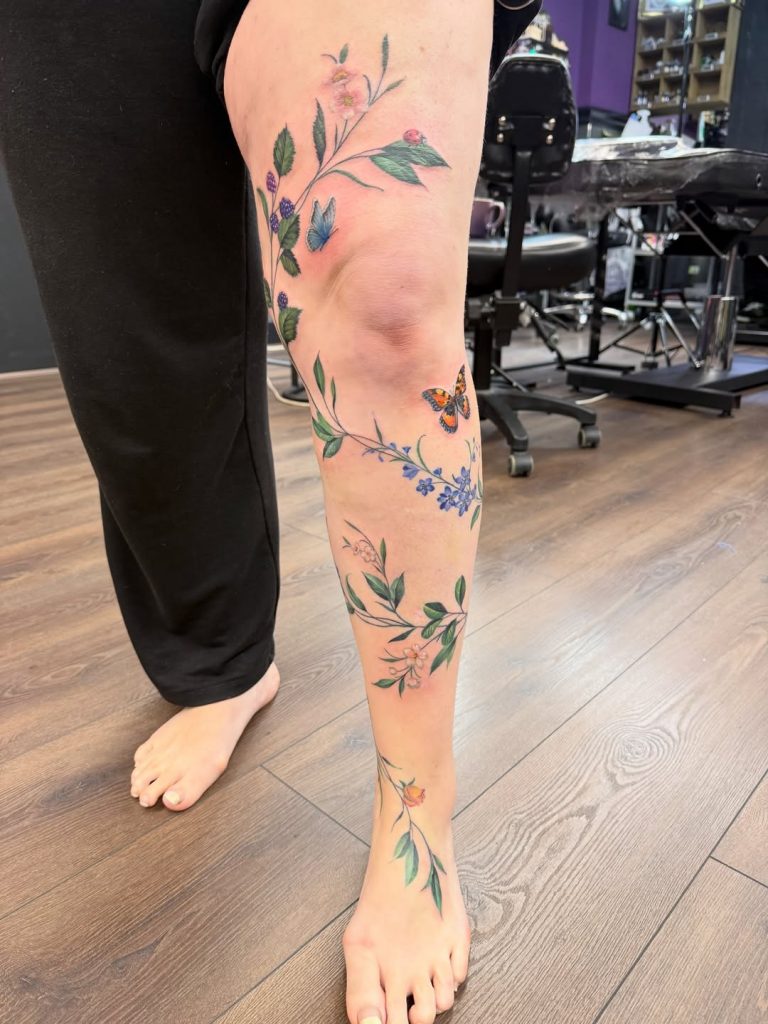
At Vivid Ink, our artists have noticed a marked increase in requests for native British species — foxgloves, bluebells, cow parsley, red campion — rather than the more universal roses and lotuses that dominated previous years. As we highlighted in our feature on the UK’s wildflower tattoo movement, this isn’t just an aesthetic choice. It reflects a genuine connection to place and landscape that resonates deeply with our clients.
The Technique Behind the Petals
One of the reasons botanical tattoos have earned serious respect within the tattoo community is the sheer technical skill they demand. A photorealistic portrait of a human face is widely acknowledged as one of the hardest styles to execute — we’ve discussed at length why portrait tattoos remain so popular and so revered. Botanical realism sits in a surprisingly similar space.
Translating the translucency of a poppy petal, the fine veining of an oak leaf, or the way morning light catches a wet stem requires mastery of needle groupings, ink dilution, and skin understanding. A single petal might involve four or five tonal shifts to avoid looking flat.
Many of our artists work across both portrait and botanical styles precisely because the foundational skills overlap: reading reference photographs critically, understanding how contrast behaves on different skin tones over time, and knowing when to let negative space do the heavy lifting. If your artist can nail a realistic portrait, there’s a strong chance they can render a sprig of heather that genuinely looks alive on your skin.
Beyond photorealism, we’re also seeing a rise in illustrative and neo-traditional botanical work — bolder lines, richer colour palettes, and compositions that blend scientific-illustration accuracy with a more graphic sensibility. This hybrid approach tends to age exceptionally well, which matters when you’re committing to a piece you’ll carry for decades.
Making Your Botanical Tattoo Truly Yours
The single biggest piece of advice we give clients considering a botanical piece? Don’t skip the consultation. A scroll through Instagram will show you thousands of stunning floral tattoos, and it’s tempting to screenshot one and ask for a replica. But a tattoo drawn specifically for your body, your story, and your skin will always outperform a copy.
Here’s how to get the most from your design process:
Bring real references, not just tattoo photos. Botanical illustrations from field guides, your own photographs, or even a physical cutting wrapped in damp tissue — these give your artist something original to interpret rather than another tattoo to imitate.
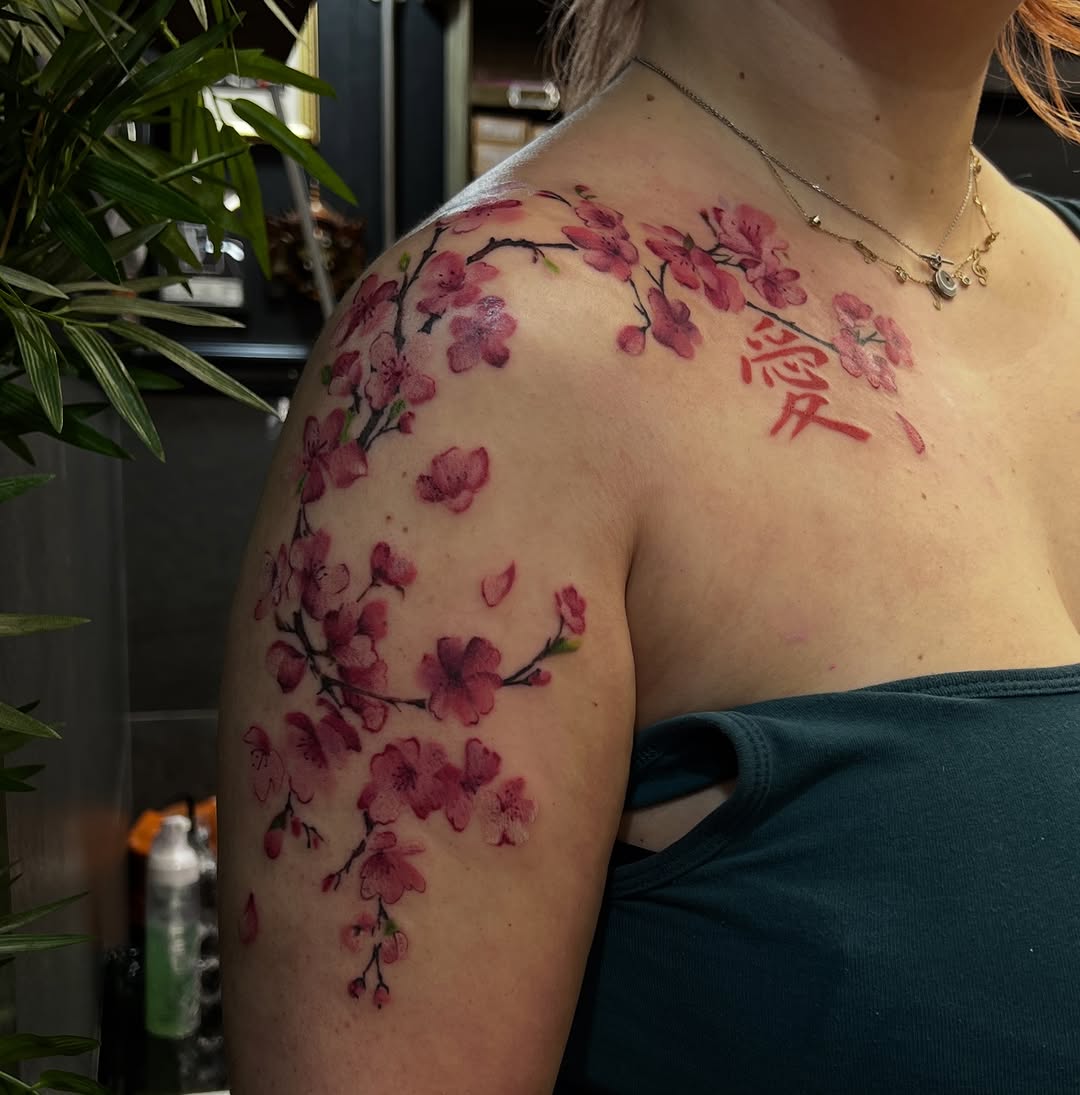
Think about placement as part of the composition. Botanical designs lend themselves beautifully to the body’s natural curves. A climbing stem that follows the line of a forearm, or a sprawling arrangement that wraps the shoulder blade, creates flow that a rectangular flash design simply cannot replicate.
Consider seasonality and lifecycle. Some of the most striking botanical pieces we’ve produced at Vivid Ink this year include elements of decay alongside full bloom — a seed head next to an open flower, autumn berries alongside spring blossom. These details add narrative depth and visual contrast.
Ask about colour longevity. Soft watercolour-style botanicals look ethereal when fresh, but certain pigments fade faster than others, particularly on sun-exposed areas. Your artist can advise on colour choices and placement that will keep your piece vibrant through years of British summers — however brief those summers may be.
Aftercare Still Matters More Than You Think
We talk about aftercare in almost every post we publish, and that’s because it remains the single most common point of failure between a good tattoo and a great one. Botanical work, with its fine detail and subtle gradients, is particularly unforgiving if healing goes wrong.
Keep the area clean, moisturised, and out of direct sunlight during the healing window. Avoid submerging fresh ink in swimming pools, hot tubs, or the sea — yes, even if you’ve booked that Cornwall trip specifically around your appointment. Your artist will provide tailored guidance, so follow it to the letter.
Ready to Grow Something Permanent?
Botanical tattoos have moved well beyond a passing spring trend. They’ve become one of the most creatively rewarding and personally meaningful genres in modern body art, and the work coming out of Vivid Ink’s thirteen West Midlands studios right now reflects that evolution.
Whether you’re drawn to a single stem of meadow cranesbill or an ambitious full-sleeve hedgerow, the first step is a conversation with an artist who understands the craft. Browse our artists’ portfolios online, find the style that speaks to you, and book a consultation at your nearest Vivid Ink studio. Let’s create something rooted in your story.

Dogs And The Tattoos That Honour Them