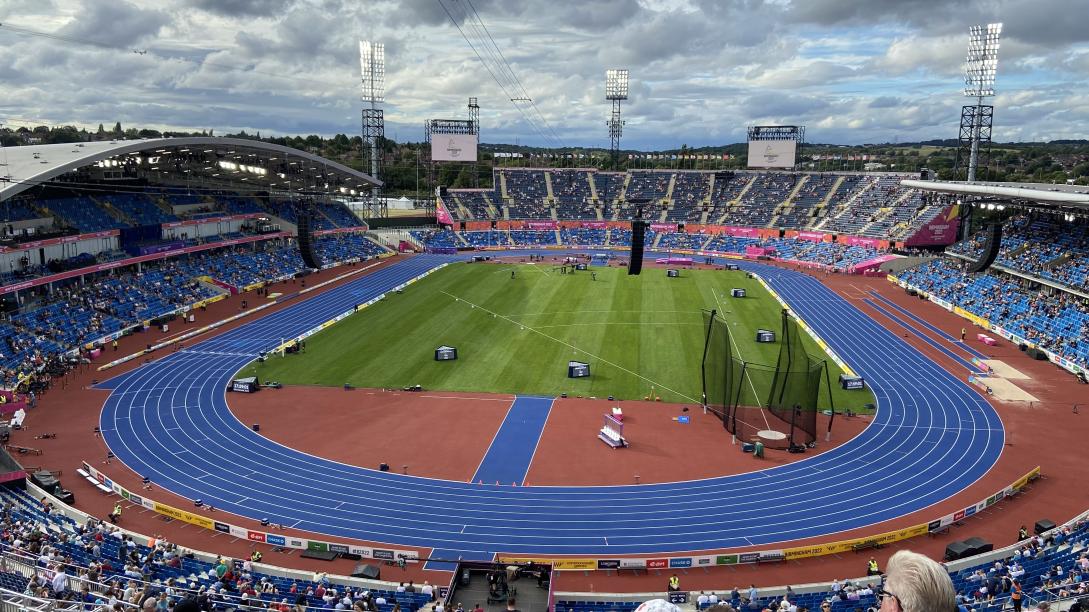
August is always our loudest month. The sun’s out, the sleeves are off, and everyone who’s been putting off a piece since January suddenly wants it healed before their holiday. But this August had something extra going on about five miles up the Walsall Road from us: for seven days, the fastest people in Europe were running, jumping and throwing at the Alexander Stadium, and Birmingham was the centre of the athletics world.
The 27th European Athletics Championships ran from 10 to 16 August, and it was the first time in the ninety-two-year history of the event that a British city had staged it. Not London. Not Manchester. Birmingham. Perry Barr. A stadium most of our team have driven past a thousand times without thinking twice about it.
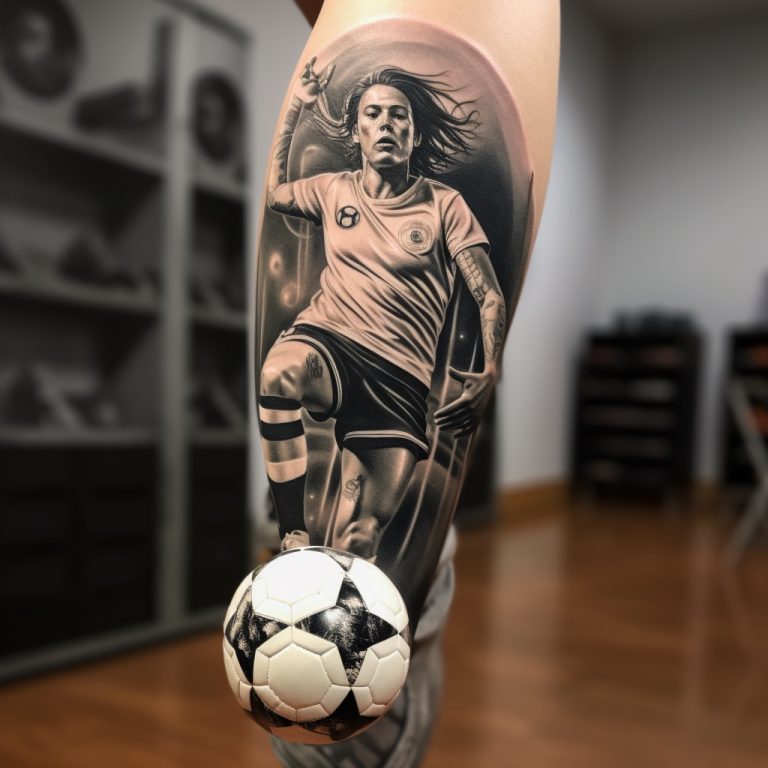
We do this every big tournament — we did it for the World Cup back in July, and for the Euros and the Lionesses before that. Sport gives us a reason to talk about the thing we talk about all day anyway: why people decide to mark a moment permanently, and what that actually looks like when it’s done well. But this one was on our doorstep, which makes it a bit different.
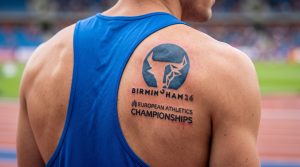
Seven days at the Alexander
If you missed it, here’s the short version. Italy topped the medal table for the second championships running with ten golds and twenty-two medals in total. Great Britain finished second with nine golds, eight silvers and two bronzes — nineteen medals, and a genuine argument that GB had the better week even without the top spot. Germany came third.
The margin, in the end, was ridiculous. It came down to the very last race of the very last night: the men’s 4x400m relay, where Italy crossed in 2:59.16 and Charlie Dobson hauled GB home in 2:59.19. Three hundredths of a second between top of the table and second. The Netherlands took bronze. You could have watched that finish fifty times and still not called it from the stands.
Elsewhere, Mondo Duplantis did what Mondo Duplantis does, clearing 6.15m in the pole vault and then simply deciding he’d had enough for the evening. Jakob Ingebrigtsen was back and winning again. The marathons produced the largest winning margin the championships have ever seen. And on day two, the men’s 100m final gave GB a 1-2 that nobody had pencilled in beforehand — Romell Glave gold, Jeremiah Azu silver, with Italy’s Olympic champion Marcell Jacobs limping to the line injured.
Amy Hunt rewrote the book
The story of the week, though, belonged to a 24-year-old sprinter from Newark who left Birmingham with four gold medals.
Amy Hunt won the women’s 100m on day one, the 200m on day four, the women’s 4x100m on day six and the mixed 4x100m on day seven — the first athlete ever to win four golds at a single European Championships. That last one came with a championship record of 39.97 and Hunt bringing it home on the anchor leg, which is about as good a way to finish a home championships as anyone could script.
Alongside her, Dina Asher-Smith turned two relay golds and a 200m bronze into something historic of her own: eight European golds, more than any athlete in the ninety-two years the championships have existed. Twenty-seven international medals, and counting. She talked afterwards about starting out just wanting to see how fast she could go, and being humbled to still be medalling twelve years after her European debut. Twelve years is a long time to stay at the top of anything.
There’s a West Midlands note in the record books too. Matthew Hudson-Smith, from Wolverhampton — five minutes from our Wolverhampton studio — won the 400m for his fifth European gold, added a relay silver, and became the most decorated male athlete in the history of the championships with nine medals. Zharnel Hughes’s two golds made him Britain’s most successful male athlete at the event with six, overtaking Hudson-Smith, Sir Mo Farah and Roger Black in the process.
And Keely Hodgkinson, in the most anticipated race of the week, was beaten to the 800m title by Switzerland’s Audrey Werro on the Friday night. Silver at a home championships, in front of a stadium that badly wanted her to win. Sometimes the story isn’t the one everybody turned up for.
The rings: athletics’ oldest tattoo tradition
Here’s where we come in.
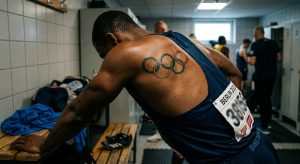
Walk through any warm-up track at this level and you’ll see the same five interlocking circles over and over — on shoulder blades, ribs, wrists, ankles, the inside of a bicep. The Olympic rings tattoo is probably the single most recognisable piece of commemorative ink in world sport, and it started with one person.
American swimmer Chris Jacobs came home from the 1988 Seoul Olympics with three medals, having noticed that some of the Canadian swimmers had small maple leaf tattoos on their chests. He got a tiny set of rings done low on his hip — low enough that it wouldn’t show in competition. Then he got a second, slightly higher. Then he gave up on subtlety altogether and had a big colour version put on the inside of his right bicep. He’s since described it as a rite of passage, like a membership card for a fairly exclusive club.
Nearly forty years on, it’s become close to a ritual. Athletes get them the week they qualify, or the week they get home. Parents get them. It spread out of the pool and into every sport at the Games. And what we find interesting about it, from behind the machine, is that almost none of them are about the medal. Plenty of athletes with the rings never stood on a podium. The tattoo marks getting there — the qualifying standard, the years of 5am sessions, the thing that can’t be taken back off you afterwards.
That’s a better reason to get a tattoo than most.
Marking a moment without overdoing it
We get a version of this conversation constantly, and it usually starts with someone saying “I want something for X, but I don’t want it to look naff in ten years.”
Fair. Here’s what tends to work.
Numbers age better than pictures. We talked in our World Cup piece about Declan Rice’s “1241” — his cap number as England’s 1,241st senior international, turned into a tattoo. A time, a date, a distance, a placing. A number means everything to the person wearing it and nothing to anyone else, which is exactly why it doesn’t date. Nobody looks at four digits in ten years and winces.
Small script beats big statements. A short line of text on a forearm or a wrist, well-placed with a font that isn’t fighting for attention, is one of the most requested things we do and one of the hardest to get right. Letter spacing, thickness and placement matter enormously — thin script in the wrong spot will blur as it settles. That’s a conversation to have before the stencil goes on, not after.
Symbols outlast likenesses. A clean linework runner, a lane marking, a stadium silhouette, a set of rings — these hold up. Photorealistic portraits of a specific moment are gorgeous when they’re done by the right artist and unforgiving when they’re not. If that’s the direction you want, come and see the portfolio first and let us match you to the right person for it.
Wait longer than you think you need to. The best commemorative tattoos we do are the ones people have been carrying around in their heads for months. The worst are the ones booked in a fortnight of adrenaline. A championships is a great prompt for a tattoo. It’s a terrible deadline for one.
Summer ink, sweat and aftercare
None of this changes the fact that mid-August is the trickiest time of year to heal a tattoo, and we say the same thing every summer because it stays true.
Fresh ink and direct sun are a bad combination. New work should stay covered — loose clothing, not a tight waistband over a fresh hip piece — for the first couple of weeks, and once it’s settled, proper SPF forever after, because UV is what fades colour and softens linework long before age does. Sea water and chlorine are out until it’s fully healed, not until it looks fully healed. And if you’re training through it, be honest with your artist about placement: a piece that’s going to spend the next fortnight rubbing under a kit strap or a waistband will heal slower and patchier than one that isn’t.
If you’re an actual runner reading this — a lot of you are, and we’ve inked plenty over the years — think about where a piece is going to sit relative to your kit, and give yourself a gap in the calendar. Placement decisions made around a training block tend to be better decisions.
One last lap
Three hundredths of a second decided a medal table. A sprinter won four golds in seven days. Somebody who’s been racing since she was seventeen became the most decorated athlete in the history of the competition. And it all happened in Perry Barr, which is not a sentence Birmingham has been able to write very often.
Whether the week has left you wanting a set of rings of your own, a date, a distance, or just something bold enough to survive the rest of the summer, our artists are always happy to talk it through properly first. No pressure, no obligation, just a conversation about what actually means something to you — across all thirteen studios, from Birmingham and Moseley to Walsall, Sutton Coldfield and beyond.
Book a consultation and let’s get it right rather than get it fast.
Well run, Birmingham.

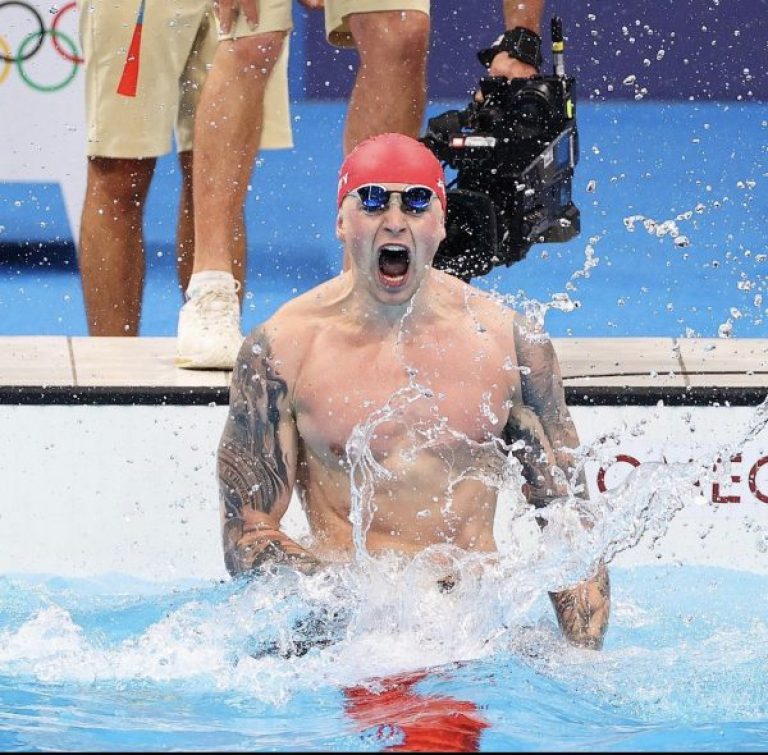
The Olympians - Adam Peaty’s tattoos
Pioneering Women in Tattooing - Jacci Gresham